Get assessed
ADHD symptoms in adults: an explainer
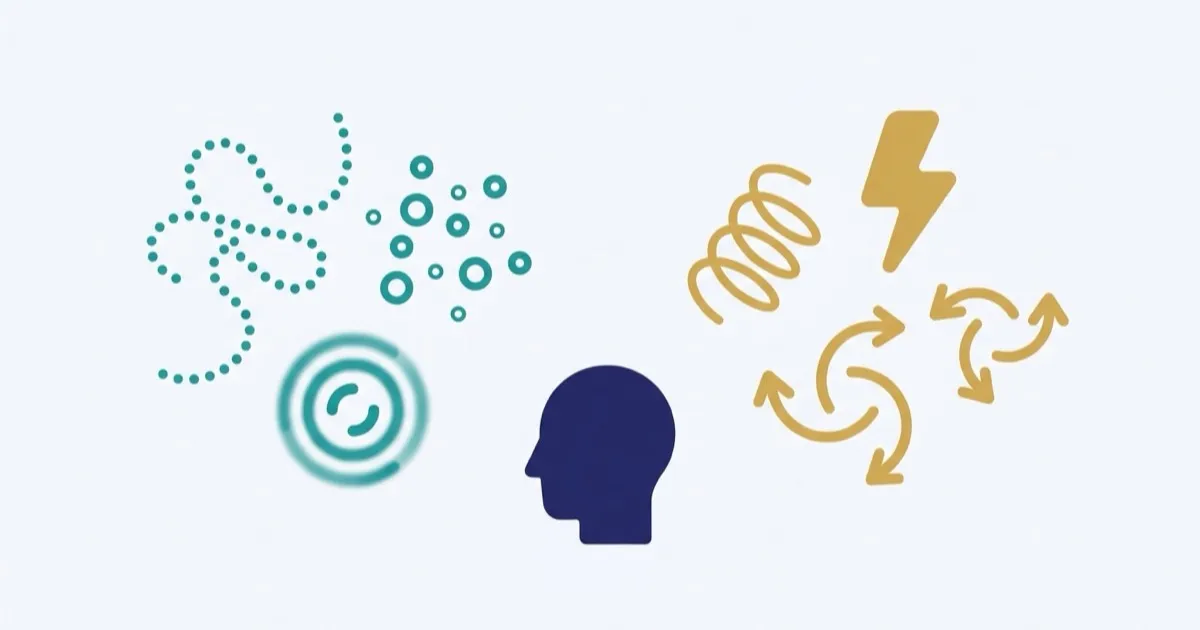
In adults, ADHD features are usually grouped around inattention, such as difficulty focusing and disorganisation, and around hyperactivity or impulsiveness, such as restlessness or acting without thinking. These traits vary widely and can have other explanations, so recognising them is a reason to consider an assessment, not a diagnosis. This is information, not medical advice, and not a self-test. Only a qualified clinician can diagnose ADHD.
Information only, not medical advice and not a self-diagnosis tool. Only a qualified clinician can diagnose ADHD after a full assessment. Many of these traits have other causes.
How ADHD is described in adults
The NHS and NICE describe ADHD features in two broad groups. The point of reading them is to understand the picture, not to score yourself. A clinician considers how long difficulties have been present, how much they affect daily life, and what else might explain them.
Inattention
- Finding it hard to sustain focus, or being easily distracted.
- Difficulty organising tasks and managing time.
- Starting tasks but not finishing them, or losing track of things.
- Forgetfulness in everyday activities.
Hyperactivity and impulsiveness
- Restlessness, or finding it hard to settle, sometimes felt internally.
- Acting without much thought, or interrupting.
- Difficulty waiting, or making decisions on impulse.
Why traits alone do not equal a diagnosis
Almost everyone recognises some of these traits at times. ADHD is considered when difficulties are persistent, have been present over the long term, and have a meaningful effect on daily life, and when other explanations such as stress, sleep, mood or other conditions have been considered. That judgement is a clinical one, which is why a proper assessment matters.
If this sounds like you
Recognising yourself here is a reasonable prompt to seek an assessment, not a conclusion. See our guide to getting an ADHD assessment for the routes, and whether online ADHD tests are accurate for why a quiz cannot stand in for a clinician. If you are not sure how children and adults differ, see assessment for children vs adults.
Frequently asked questions
What are common signs of ADHD in adults?
The NHS describes features grouped around inattention and around hyperactivity or impulsiveness, such as difficulty focusing, disorganisation, restlessness or acting without thinking. These vary a lot between people, and many can have other explanations. Only a qualified clinician can diagnose ADHD after a full assessment.
Does having these traits mean I have ADHD?
No. Many people recognise some of these traits without having ADHD, and the same traits can stem from stress, sleep, mood or other conditions. Recognising yourself in a description is a reason to consider an assessment, not a diagnosis in itself.
Is this page a self-test?
No. This is a plain-English explainer, not a self-diagnosis tool. There is no online quiz that can diagnose ADHD. A clinician assesses your history and current difficulties across the whole picture.
What should I do if this sounds like me?
If these difficulties have been present over time and affect your daily life, it is reasonable to seek an assessment. You can talk to your GP, use NHS Right to Choose in England, or go privately. Our assessment guide explains each route.
Editor, ADHD Helper
Adam leads ADHD Helper's editorial coverage of adult ADHD, and he writes it from lived experience: Adam has ADHD himself, diagnosed as an adult, and has been through the assessment routes and the daily workarounds this site covers. He is the founder and managing director of Muswell Rose and researches the plain-English explainers on getting an ADHD assessment through NHS Right to Choose or privately, and on the products and tools people use to manage ADHD, drawing on guidance from the NHS, NICE and the Royal College of Psychiatrists. He is clear that the site is information, not medical advice, and that diagnosis is for a registered clinician.
Last reviewed: 24 July 2026