Guide
How to prepare for an ADHD assessment
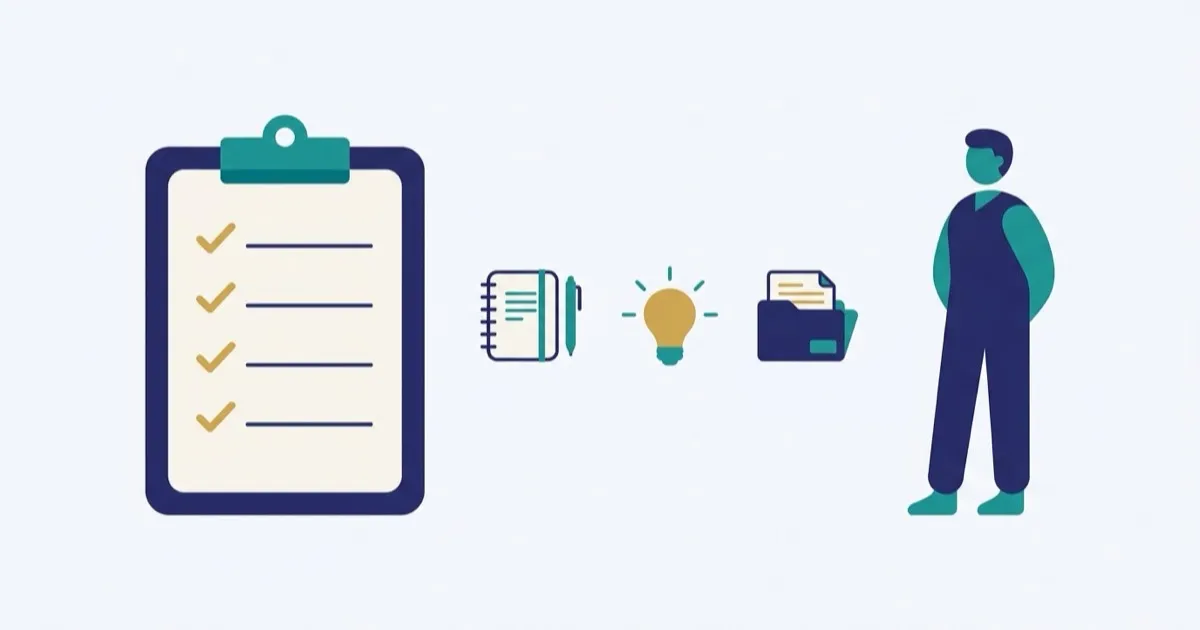
To prepare for an adult ADHD assessment, gather notes on how difficulties affect your daily life, examples from different settings such as work and home, and any earlier records like school reports. The aim is to give an accurate picture, not to influence the outcome. This is information, not medical advice, and only a qualified clinician can diagnose ADHD.
Information only, not medical advice and not a diagnosis. Preparing well helps the assessment be thorough; it does not and should not steer the result. Only a qualified clinician can diagnose ADHD.
What to gather beforehand
A good assessment looks at your history across different parts of life. It can help to bring:
- Notes on the difficulties you experience and concrete examples from work, home and study.
- Any earlier records, such as school reports, that show a longer pattern.
- A list of other conditions, medications or relevant family history.
- Anything a partner, family member or friend has noticed, if your provider asks for that.
Providers differ in what they ask for, so confirm their specific requirements when you book.
What to expect on the day
An assessment is usually a detailed conversation about how attention, activity and impulsivity have affected your life over time, often alongside questionnaires completed in advance. It is normal for it to take longer than a standard appointment. Being honest and specific is more useful than trying to present a particular way; the clinician is looking at the full picture.
Questions worth asking
- What does your assessment process involve, and how long does it take?
- What are the clinician's qualifications for assessing adult ADHD?
- What happens after the assessment, including around any medication and shared care with my GP?
Related guides
To do this preparation on paper, the printable assessment prep worksheet collects your examples setting by setting and lists what assessors commonly ask, and the GP appointment script covers the referral appointment itself. Before you book, it helps to choose your route: see Right to Choose vs private vs NHS and how to find a provider. Our assessment guide covers the routes, and the newly diagnosed guide covers what tends to happen after.
Frequently asked questions
What should I bring to an ADHD assessment?
It helps to bring notes on how difficulties affect your daily life, examples from different settings such as work and home, and any school reports or earlier records if you have them. Some assessments ask someone who knows you well to contribute. Check with your provider what they specifically want, as this varies.
How long does an ADHD assessment take?
It varies by provider and route. An assessment is usually more than a single short appointment and may involve questionnaires beforehand and a detailed conversation about your history. Ask your provider what their process looks like so you know what to expect.
Can I prepare in a way that guarantees a diagnosis?
No, and you should not try to. The point of preparing is to give an accurate picture, not to steer the outcome. Only a qualified clinician can diagnose ADHD, based on an honest account of your experiences. Being well prepared simply helps the assessment be thorough.
What happens after the assessment?
You will usually get the outcome and, if relevant, a discussion of next steps, which may include support options. What follows depends on your situation and is a clinical matter. Our newly diagnosed guide covers what tends to happen next.
Editor, ADHD Helper
Adam leads ADHD Helper's editorial coverage of adult ADHD, and he writes it from lived experience: Adam has ADHD himself, diagnosed as an adult, and has been through the assessment routes and the daily workarounds this site covers. He is the founder and managing director of Muswell Rose and researches the plain-English explainers on getting an ADHD assessment through NHS Right to Choose or privately, and on the products and tools people use to manage ADHD, drawing on guidance from the NHS, NICE and the Royal College of Psychiatrists. He is clear that the site is information, not medical advice, and that diagnosis is for a registered clinician.
Last reviewed: 30 July 2026