Tools and supplements
Omega-3 for ADHD: what the evidence says
Independent editorial. We sell supplements in our own store (always labelled), and if any affiliate or introducer link is ever added we may earn a commission at no extra cost to you, disclosed where it appears. Today, outbound product and provider links earn us nothing. None of this changes our editorial verdicts. How we are funded.
Omega-3 is a group of fatty acids found in oily fish and some plants, sold as a supplement and taken by some people for general health. It is not a treatment for ADHD. Some research has explored a possible modest role, but the evidence is mixed and it is not a recommended ADHD treatment. If you want to try it, speak to a pharmacist or clinician first, especially if you take medication. This is information, not medical advice.
Information only, not medical advice. Omega-3 does not treat or cure ADHD. Speak to a pharmacist or clinician before starting any supplement, particularly if you take medication, are pregnant, or have a health condition.
What omega-3 is
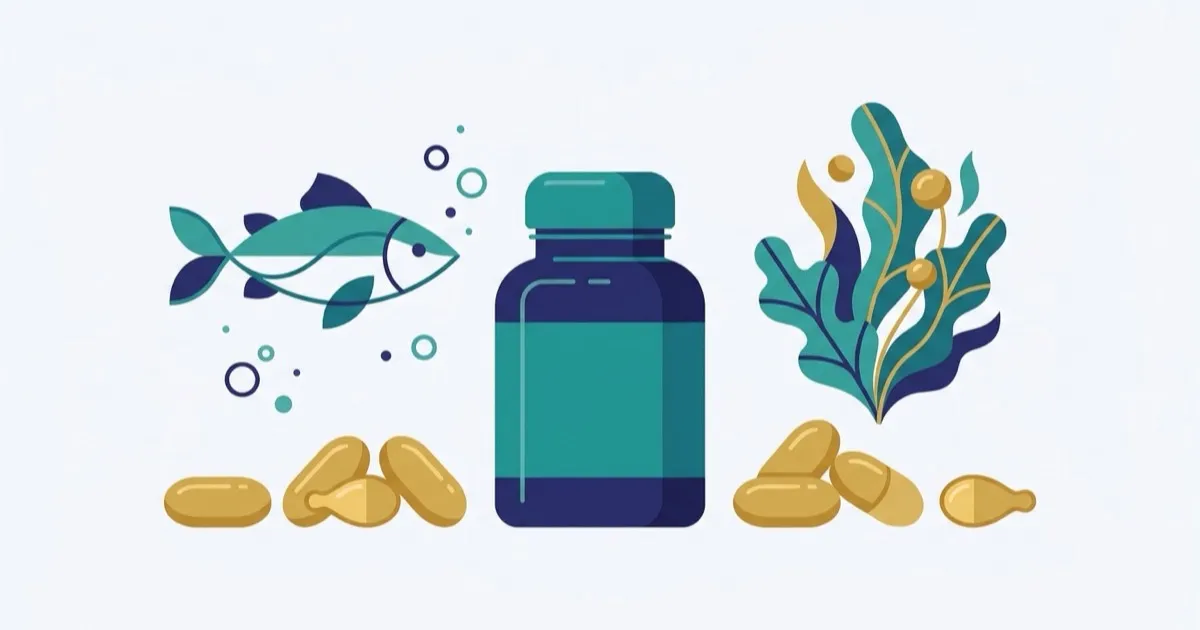
Omega-3 fatty acids, including EPA and DHA, occur in oily fish such as salmon and mackerel, and in plant sources such as algae and flaxseed. They are sold as supplements, often as fish oil or, for those avoiding fish, algae-based capsules. As a supplement, omega-3 is marketed for general health, not as a medicine for ADHD.
What the evidence does and does not say
The honest position is that omega-3 is not a treatment for ADHD. Some studies have looked at whether it has a modest role, but findings are mixed and reputable bodies do not recommend it for that purpose. Treat strong claims with caution, and remember a supplement is not a substitute for clinical care. For the wider picture of managing adult ADHD, see what actually helps.
Named UK products people consider
If, after speaking to a pharmacist, you choose to try omega-3, these are established UK brands that sell a fish-oil or algae-based supplement. We do not rank them as ADHD treatments, because they are not.
- Bare Biology Lion Heart Omega-3 A UK fish-oil brand offering high-strength EPA and DHA.
- Wileys Finest Omega-3 A widely available UK omega-3 supplement range.
- Vegetology Opti3 Omega-3 A UK vegan algae-based omega-3 for those avoiding fish oil.
We name these products without links: no affiliate programme is live, we earn nothing if you buy them, and searching the brand name finds them in seconds. If links are ever added, any affiliate relationship will be disclosed. See how we are funded.
Frequently asked questions
Does omega-3 help ADHD?
Omega-3 is not a treatment for ADHD. Some studies have explored a possible modest role, but the evidence is mixed and reputable bodies do not recommend it as an ADHD treatment. Some people take it for general health. Speak to a pharmacist or clinician before starting it, especially if you take medication.
What is omega-3 anyway?
Omega-3 fatty acids, including EPA and DHA, are found in oily fish and some plant sources, and are sold as supplements. They are taken for general health reasons rather than as a medicine for ADHD. A pharmacist can advise on whether a supplement is suitable for you.
Is omega-3 safe to take?
For most people omega-3 supplements are well tolerated at recommended amounts, but they can interact with some medicines and conditions, including blood thinners. Check with a pharmacist or clinician first, and follow the product label.
Can omega-3 replace my ADHD medication?
No. A supplement is not a substitute for treatment prescribed by your clinician. Never stop or change prescribed medication to take a supplement. Discuss any changes with your prescriber.
Editor, ADHD Helper
Adam leads ADHD Helper's editorial coverage of adult ADHD, and he writes it from lived experience: Adam has ADHD himself, diagnosed as an adult, and has been through the assessment routes and the daily workarounds this site covers. He is the founder and managing director of Muswell Rose and researches the plain-English explainers on getting an ADHD assessment through NHS Right to Choose or privately, and on the products and tools people use to manage ADHD, drawing on guidance from the NHS, NICE and the Royal College of Psychiatrists. He is clear that the site is information, not medical advice, and that diagnosis is for a registered clinician.
Last reviewed: 26 July 2026